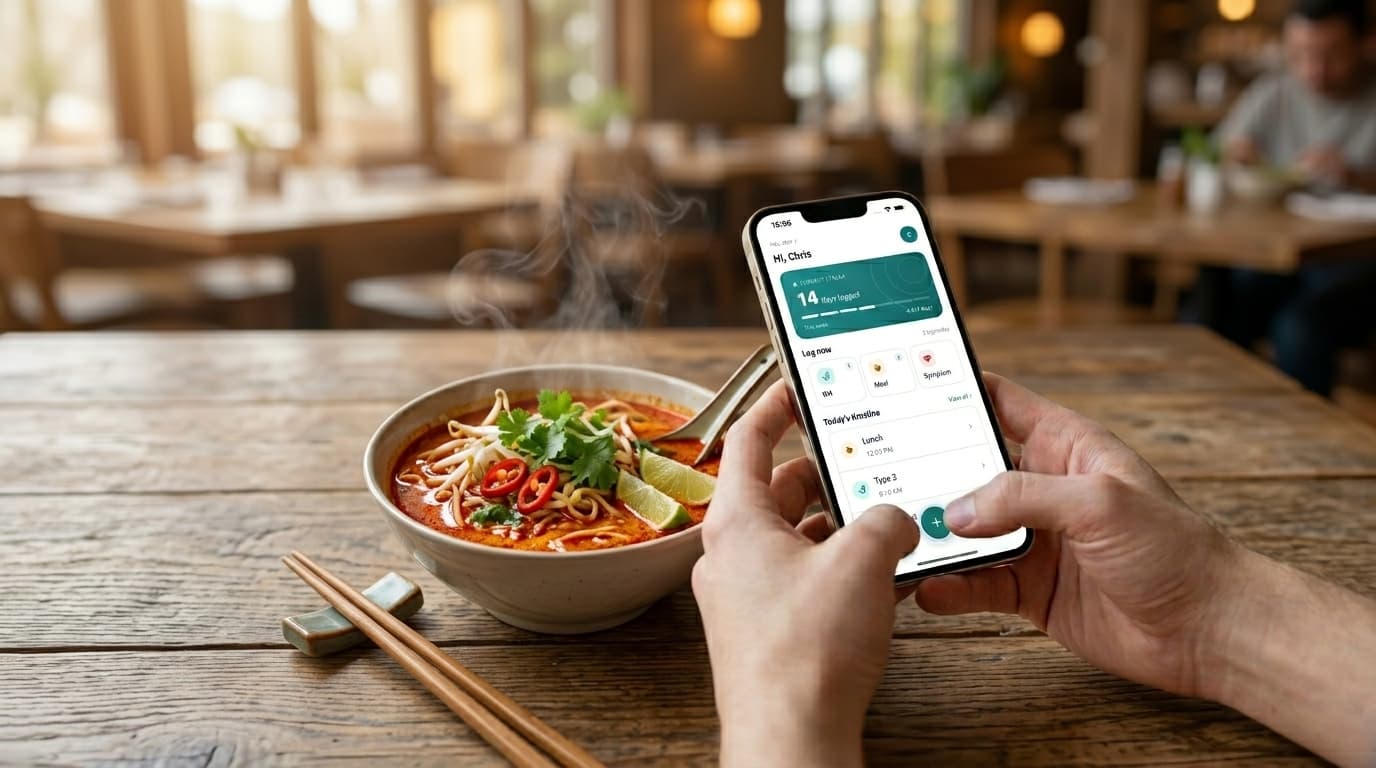
Spicy food can trigger IBS symptoms mainly through capsaicin, the compound that makes chili hot, which can speed up the gut and increase sensitivity. But spicy dishes often carry other triggers too, like fat, garlic, and onion. Whether spice is a trigger for you is individual, and the cleanest way to find out is to log it for two weeks and review the pattern.
If a hot curry or a spicy taco reliably brings on cramps or a dash to the bathroom, you are not imagining it. Spice has a real effect on the gut, and IBS can make it feel stronger. But not everyone with IBS reacts to spice, and sometimes it is the rest of the dish doing the damage, so it is worth testing rather than assuming.
Key takeaways
- Capsaicin in spicy food can speed up gut movement and increase sensitivity, leading to cramping or urgency.
- The effect is individual. Some people with IBS handle spice fine, others clearly do not.
- Spicy meals are often also high in fat, garlic, and onion, which are common triggers on their own.
- Tolerance varies and is not guaranteed to build up, so testing beats pushing through.
- A 14-day log of spicy food alongside stool type and symptoms is the clearest way to test it.
Why spicy food can trigger IBS symptoms
Capsaicin speeds up and sensitizes the gut
Capsaicin activates receptors in the digestive tract that can increase gut movement and heighten the sensation of pain or burning. In IBS, where gut sensitivity is often already turned up, that can translate into cramps, urgency, or looser stools not long after a spicy meal.
It is often the company spice keeps
Many spicy dishes are also rich, fatty, and loaded with garlic and onion, which are high-FODMAP and common triggers in their own right. A reaction blamed on the chili might really be the creamy, garlicky sauce it came in.
Spice can amplify an already sensitive day
On a day when your gut is already reactive, from stress, poor sleep, or another food, spice can be the extra nudge that tips you into symptoms. The same dish on a calmer day might not.
How to test whether spicy food is your trigger
Guessing rarely works, because IBS symptoms vary day to day and other triggers overlap. A short, structured test is more reliable.
- Log your normal pattern for a few days. Record your meals including how spicy they were, your stool type on the Bristol scale, urgency, and symptoms like bloating or cramps.
- Reduce spice for two weeks. Cut back on hot dishes while keeping everything else the same. Changing one variable at a time keeps the result readable.
- Keep logging. Consistency matters more than detail. A quick note each day beats a perfect note once a week.
- Review the two weeks together. Look for whether your stool type and symptoms actually shifted, not just one good or bad day.
If symptoms ease when you cut spice and return when you add it back, that is a strong signal for you. If nothing changes, spice probably is not your trigger, and you can look at the fat, garlic, or onion in those meals instead.
What to track alongside spicy food
- Stool type (Bristol scale 1 to 7)
- Urgency and abdominal pain
- Bloating, gas, and other symptoms
- How spicy the meal was, and whether it was also fatty or rich
- Garlic and onion in the dish
- Stress and sleep, which can amplify any trigger
The bottom line
Spicy food is a plausible IBS trigger, but it is not a universal one, and it rarely acts alone. It is also just one of several common IBS trigger foods worth testing one at a time. Rather than cutting out everything hot on a hunch, log it for 14 days alongside your stool and symptoms and let your own data answer the question. That way you only give up what is actually causing problems, and you keep the heat you can handle.
Medical note
This article is for educational purposes only and does not provide a diagnosis. It does not replace medical care. If symptoms are new, severe, unusual for you, persistent, getting worse, or linked with warning signs such as bleeding, black stools, anemia, or unexplained weight loss, seek medical advice.
Editorial note
This article was written for educational purposes and references general guidance from NIDDK, NHS, and the American College of Gastroenterology.
FAQ
Does spicy food make IBS worse?▼
It can for some people. Capsaicin, the compound that makes food hot, can speed up gut movement and increase sensitivity, which may lead to cramping, urgency, or a burning sensation. Whether it affects you is individual, which is why tracking helps.
Why does spicy food make me poop?▼
Capsaicin activates receptors in the gut that can speed up transit and stimulate movement. In IBS, where the gut is often already more sensitive, that effect can feel stronger and more urgent.
Is it the spice or something else in the dish?▼
Often it is both. Many spicy dishes are also high in fat, garlic, and onion, which are themselves common triggers. Logging the whole meal helps separate the chili heat from the other ingredients.
Can I build up a tolerance to spicy food with IBS?▼
Some people do tolerate spice better over time, but it varies a lot and is not guaranteed. Rather than pushing through symptoms, it is more useful to test your own response and find the level your gut is comfortable with.
How long should I test cutting out spicy food?▼
Around 14 days. Reduce or remove spicy food for two weeks while keeping everything else the same, keep logging stool and symptoms, then review whether your pattern actually shifted.