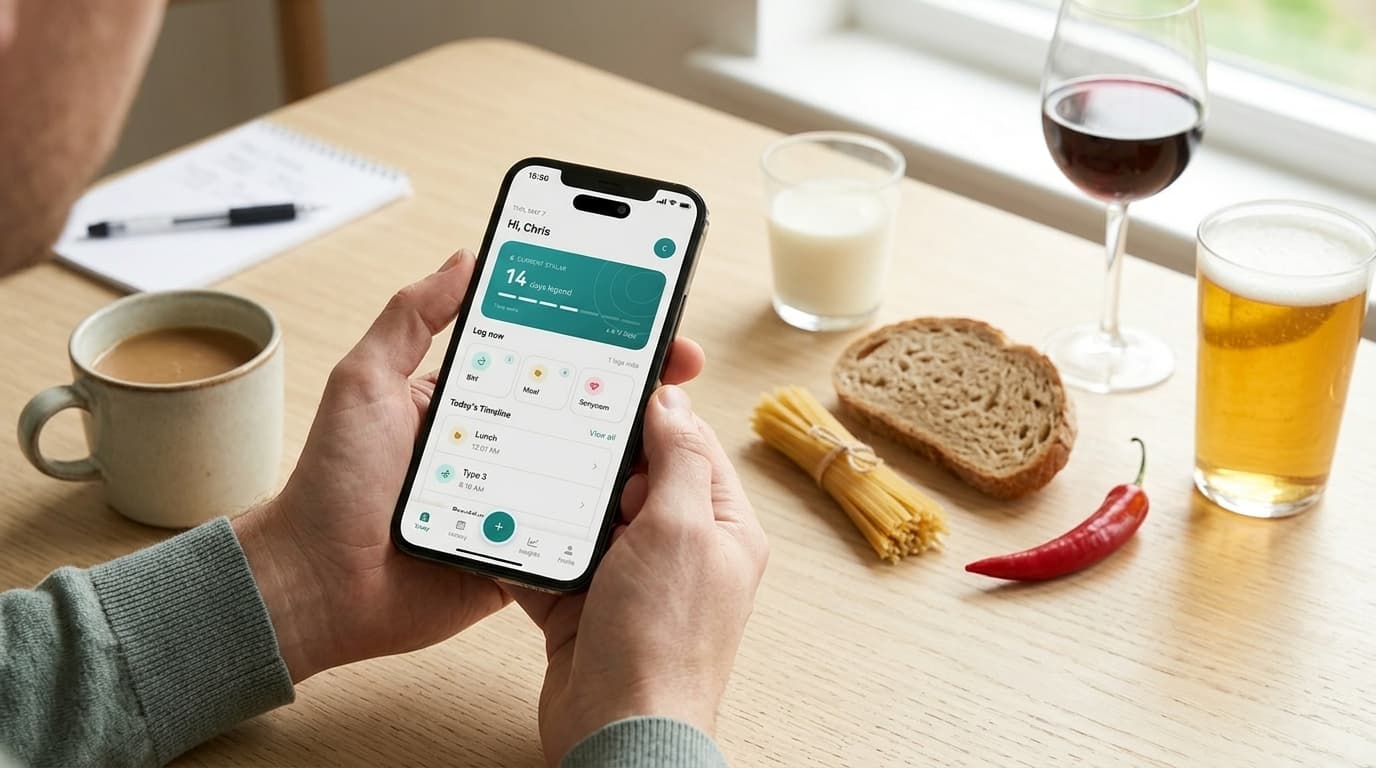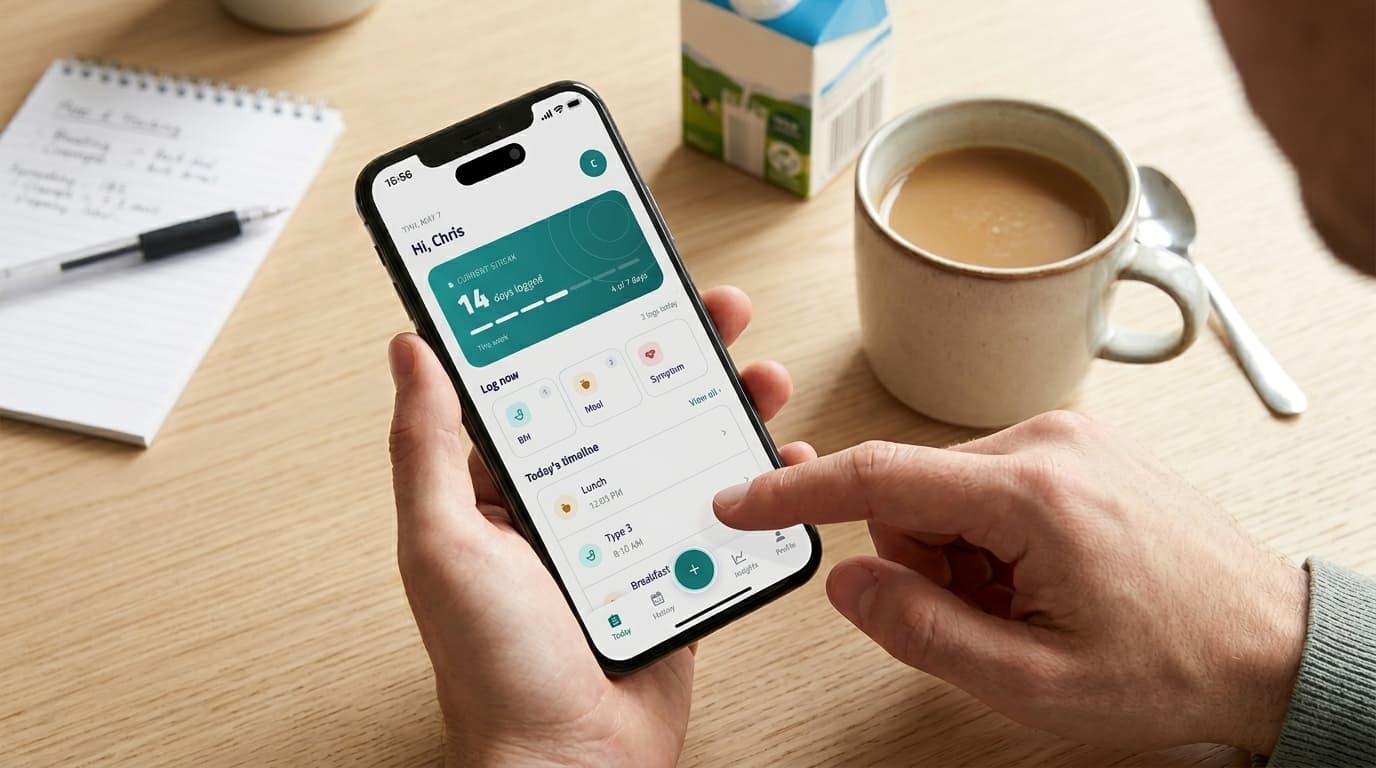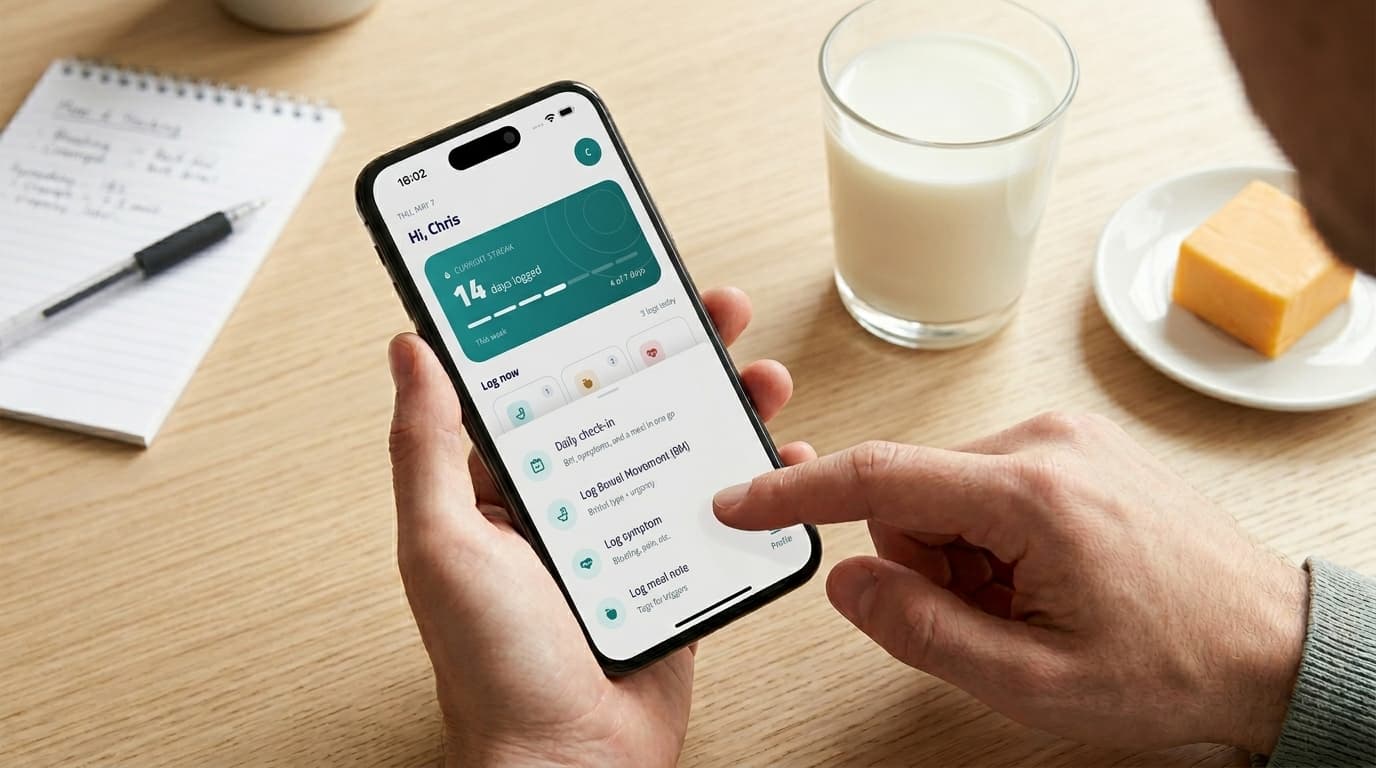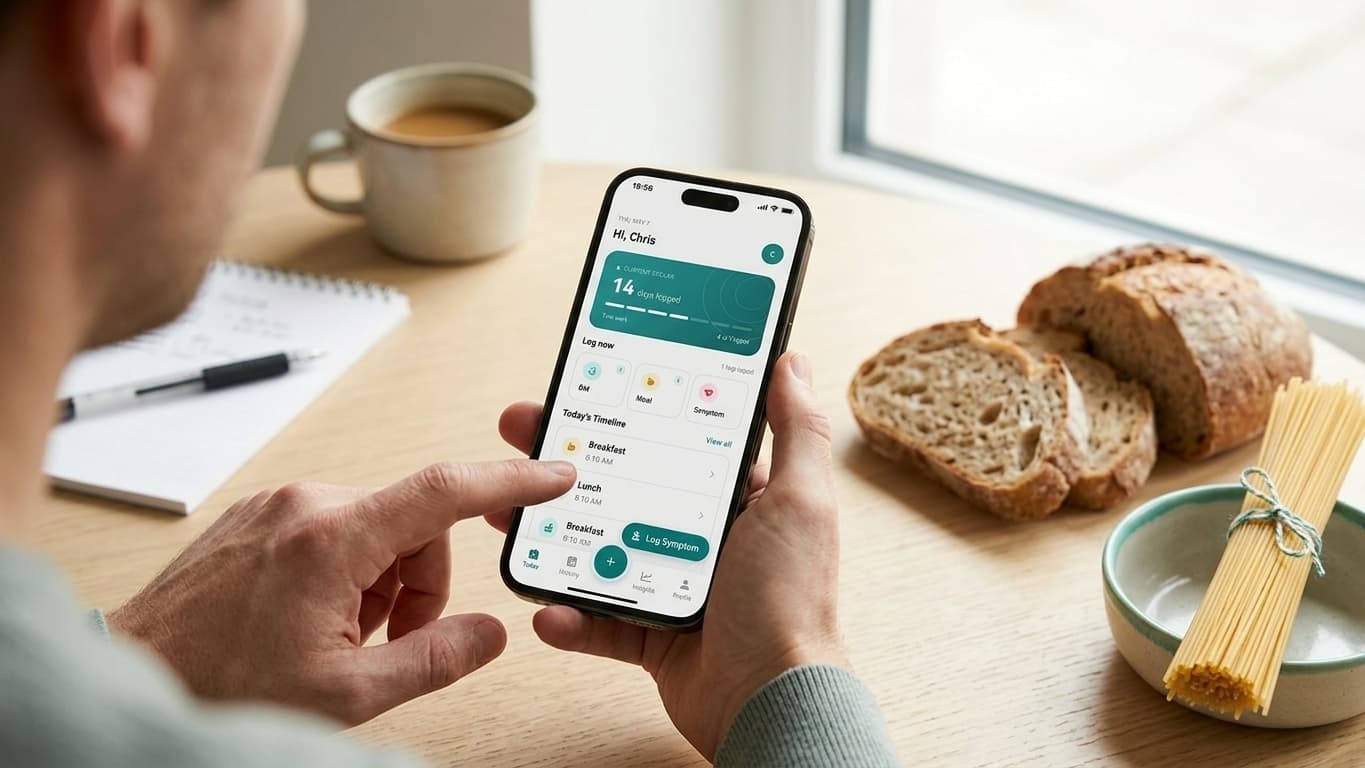
Gluten gets blamed for a lot of IBS symptoms, but for most people without celiac disease the real trigger in wheat is fructans, a fermentable carbohydrate, not gluten itself. That distinction matters, because it changes what you actually need to cut. The cleanest way to know is to test wheat for two weeks and review the pattern.
If you have IBS and bread or pasta seems to set you off, you are not imagining it. But "going gluten-free" is a bigger and blunter step than most people need. Understanding what in wheat is likely bothering you helps you make a smaller, smarter change.
Key takeaways
- For most people with IBS, the trigger in wheat is fructans (a FODMAP), not gluten itself.
- Celiac disease is different. It is an autoimmune reaction to gluten and needs testing before you cut gluten out.
- A strict gluten-free diet is rarely necessary for IBS and is more restrictive than reducing wheat.
- What you feel after cutting bread and pasta is often a lower fructan load, not a gluten effect.
- A 14-day log of wheat alongside stool type and symptoms is the clearest way to test it.
Why wheat can trigger IBS symptoms
Fructans, not gluten, are usually the issue
Wheat, rye, and barley contain fructans, one of the FODMAPs. Fructans are poorly absorbed, draw water into the gut, and are fermented by gut bacteria, producing gas, bloating, cramps, and changes in bowel habits. In blinded studies, many people who believed they reacted to gluten actually reacted to fructans. That is why reducing wheat often helps even when gluten is not the culprit.
Celiac disease is a separate thing
Celiac disease is an autoimmune condition where gluten damages the small intestine. It is not IBS, and it needs proper testing. Importantly, if you cut gluten out before testing, the tests can come back falsely normal. So if you have a real suspicion of celiac disease, get tested first, while still eating gluten.
Non-celiac wheat sensitivity
Some people without celiac disease still feel clearly worse with wheat. This is sometimes called non-celiac gluten or wheat sensitivity. The mechanism is debated, but the practical answer is the same: test your own response rather than assume.
How to test whether wheat is your trigger
Guessing rarely works, because IBS symptoms vary day to day and other triggers overlap. A short, structured test is more reliable.
- Log your normal pattern for a few days. Record your wheat (bread, pasta, cereal, baked goods), your stool type on the Bristol scale, urgency, and symptoms like bloating or cramps.
- Reduce wheat for two weeks. Lower bread, pasta, and other wheat while keeping everything else the same. Changing one variable at a time keeps the result readable.
- Keep logging. Consistency matters more than detail. A quick note each day beats a perfect note once a week.
- Review the two weeks together. Look for whether your stool type and symptoms actually shifted, not just one good or bad day.
If symptoms ease when you cut wheat and return when you add it back, that is a strong signal for you. You can then explore whether it is the amount of wheat (fructans) you tolerate rather than an all-or-nothing rule.
What to track alongside wheat
- Stool type (Bristol scale 1 to 7)
- Urgency and abdominal pain
- Bloating, gas, and other symptoms
- The wheat source and rough portion
- Whether anything else high-FODMAP was in the meal
- Stress and sleep, which can amplify any trigger
The bottom line
Gluten is rarely the whole story in IBS. For most people, wheat affects the gut through fructans, which means you may not need to go fully gluten-free at all. Rule out celiac disease if you suspect it, then log wheat for 14 days alongside your stool and symptoms and let your own data tell you how much wheat your gut is comfortable with.
Medical note
This article is for educational purposes only and does not provide a diagnosis. It does not replace medical care. If you suspect celiac disease, ask for testing before removing gluten. If symptoms are new, severe, unusual for you, persistent, getting worse, or linked with warning signs such as bleeding, black stools, anemia, or unexplained weight loss, seek medical advice.
Editorial note
This article was written for educational purposes and references general guidance from NIDDK, NHS, Monash University, and the American College of Gastroenterology.
FAQ
Is gluten bad for IBS?▼
Not necessarily. Unless you have celiac disease, the trigger in wheat is often fructans, a FODMAP, rather than gluten itself. Many people with IBS feel better on less wheat and assume it was the gluten, when reducing fructans was doing the work.
What is the difference between celiac disease and IBS?▼
Celiac disease is an autoimmune reaction to gluten that damages the gut and is diagnosed with specific tests. IBS is a separate condition. If you suspect celiac disease, get tested before cutting gluten out, because going gluten-free first can hide the diagnosis.
Should I go gluten-free if I have IBS?▼
Not automatically. A strict gluten-free diet is restrictive and only clearly needed for celiac disease. For IBS, it is better to test whether wheat affects you, and a low-FODMAP approach to wheat is often more precise than cutting all gluten.
Why do I feel better eating less bread and pasta?▼
Bread and pasta are major sources of fructans, a fermentable carbohydrate that can cause bloating, gas, and changes in bowel habits in IBS. Cutting them lowers your fructan load, which may be the real reason you feel better.
How long should I test cutting out wheat?▼
Around 14 days. Reduce wheat for two weeks while keeping everything else the same, keep logging stool and symptoms, then review whether your pattern actually shifted before deciding.