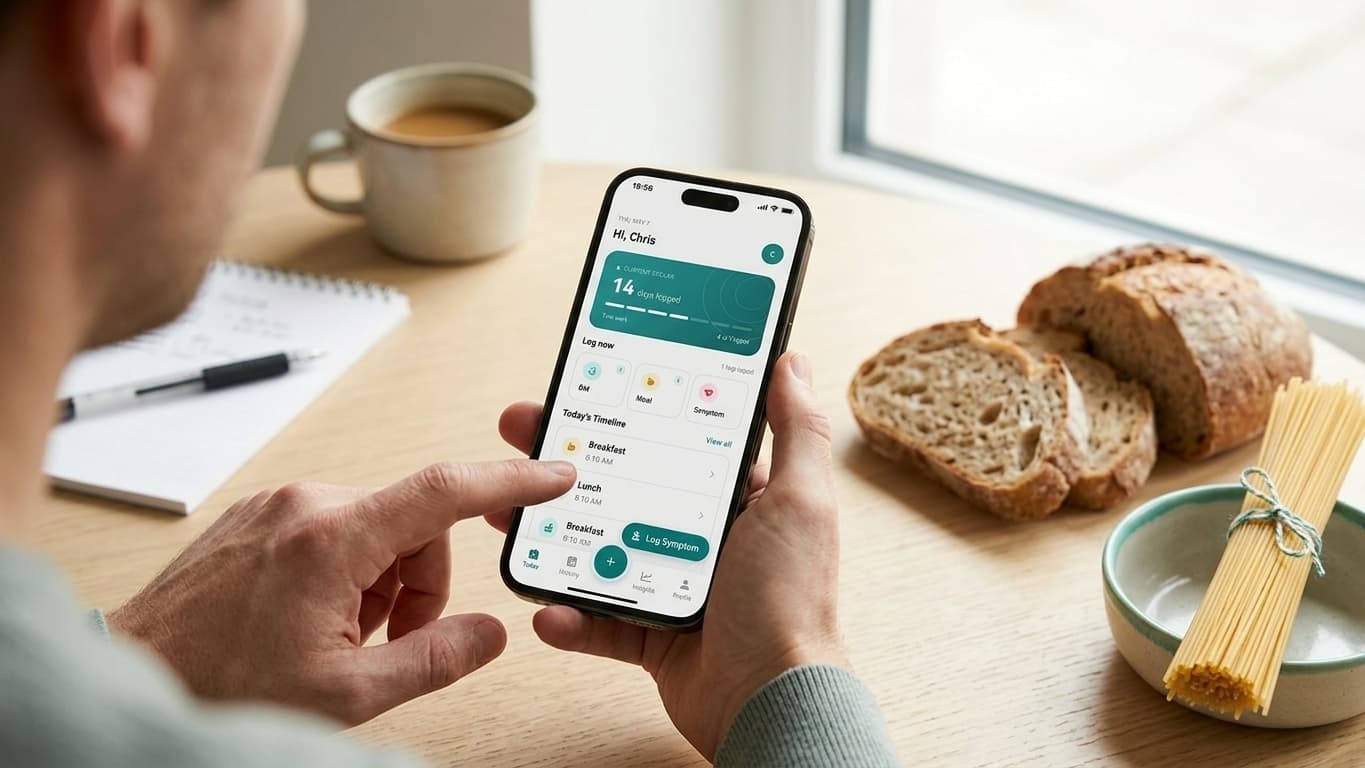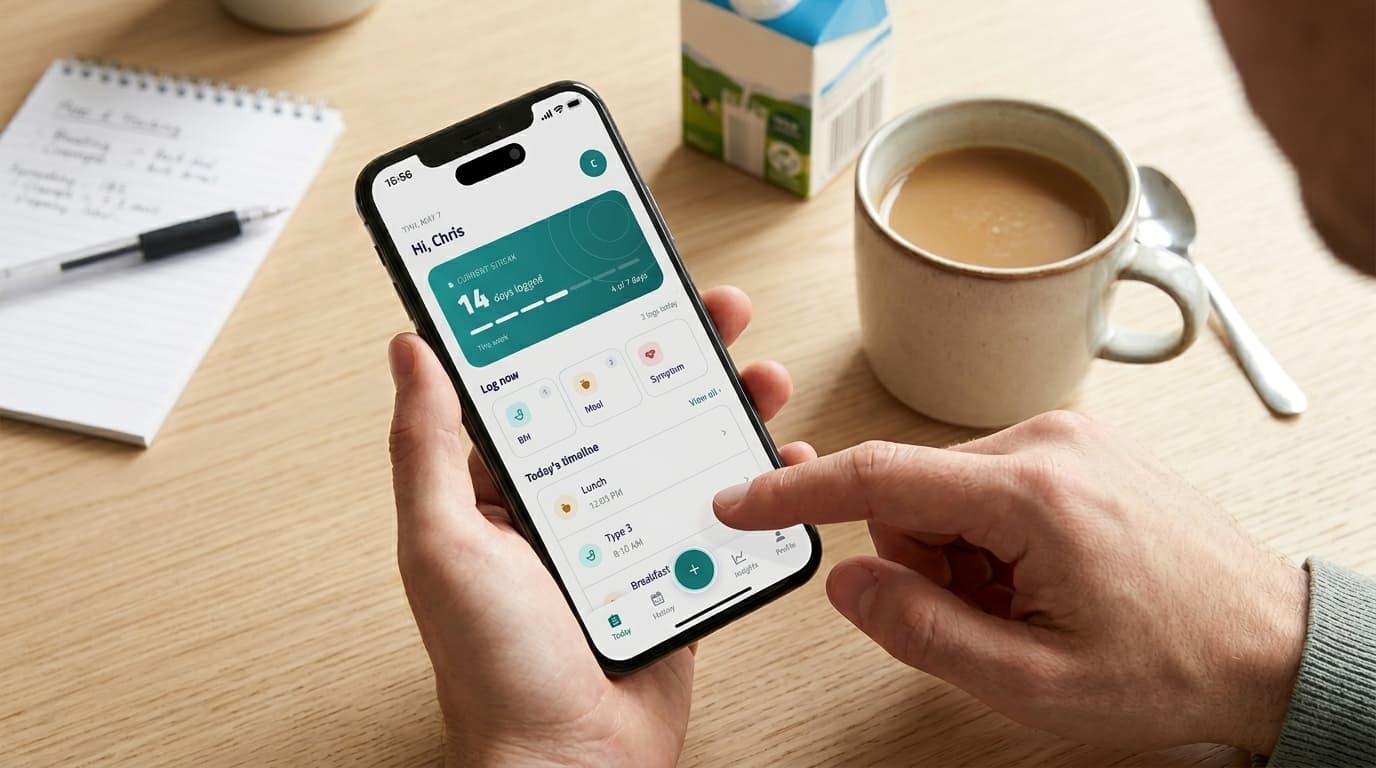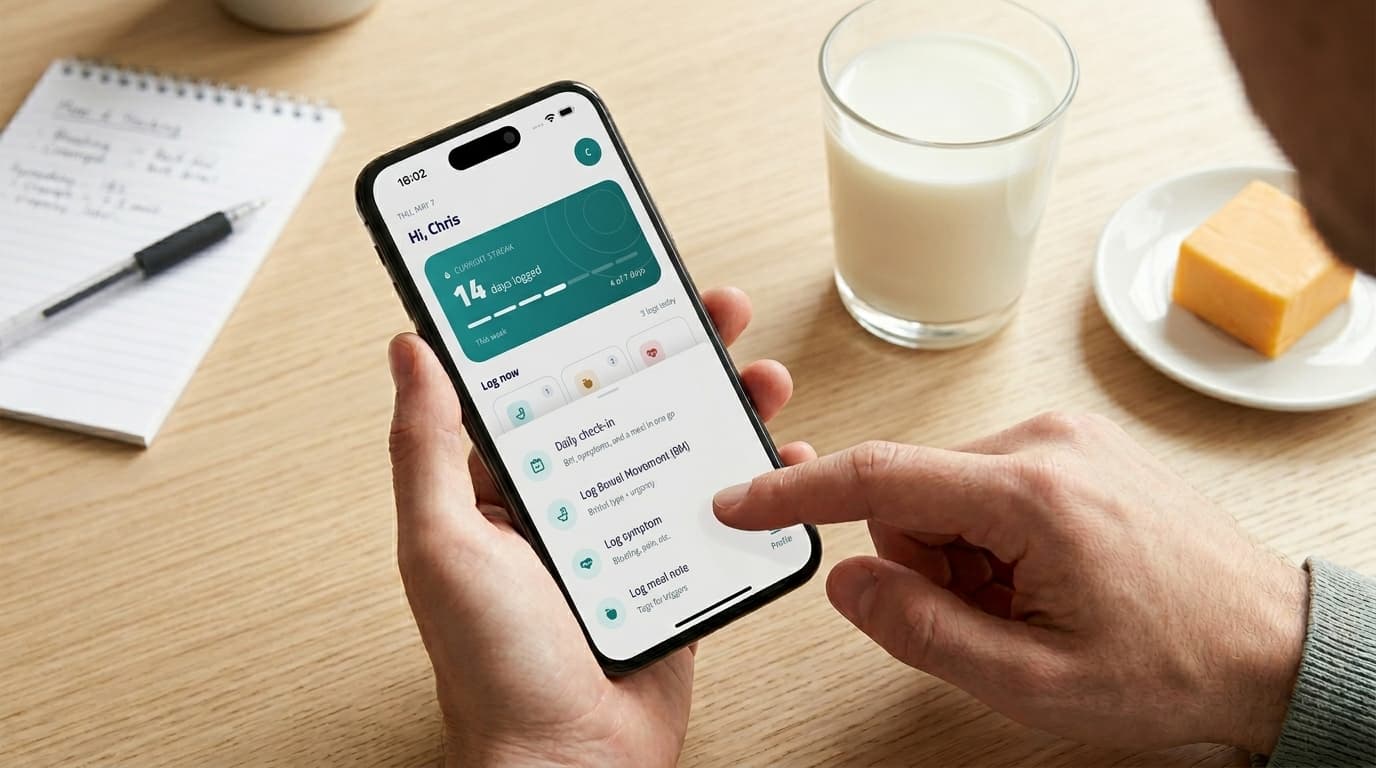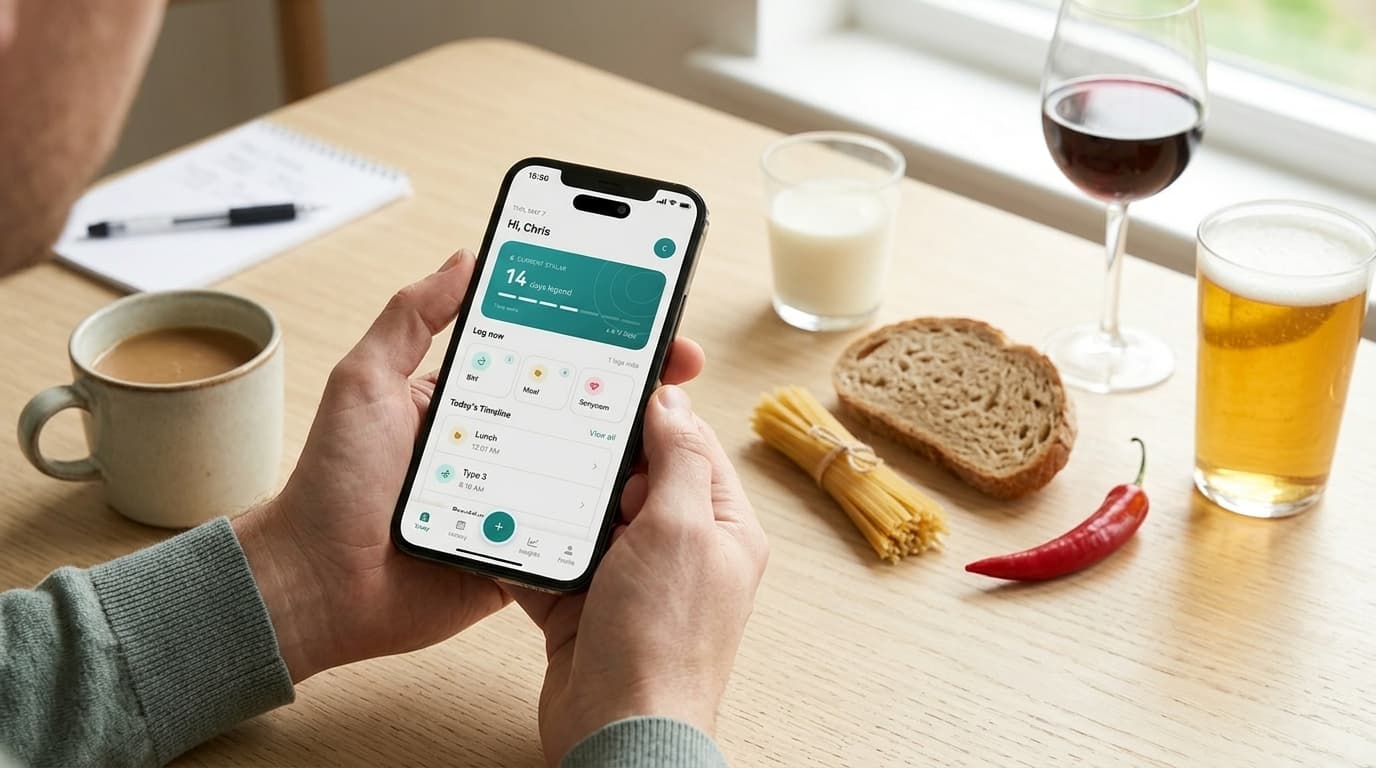
Some foods come up again and again as IBS triggers, including coffee, dairy, wheat and gluten, alcohol, spicy food, fatty food, and high-FODMAP foods like onion and garlic. But IBS triggers are individual. The point of knowing the common culprits is not to cut them all out, it is to give you a shortlist to test against your own logs.
If you have IBS, you have probably been handed a long list of foods to avoid at some point. The problem with those lists is that they treat everyone the same. A food that wrecks one person's day does nothing to another's. So the useful question is never "what foods are bad for IBS" but "which of these foods are triggers for me."
Key takeaways
- Common IBS trigger foods include coffee, dairy, wheat and gluten, alcohol, spicy food, fatty food, and high-FODMAP foods.
- Triggers are individual. A universal "foods to avoid" list usually removes things you actually tolerate.
- FODMAPs are one major group of triggers, but not every trigger is a FODMAP.
- Testing one food at a time over about two weeks is the clearest way to find yours.
- The goal is the least restrictive diet that keeps you comfortable, not the longest avoid-list.
The common culprits
These are the foods most often linked with IBS symptoms. Use them as a shortlist to test, not a list to fear.
Coffee and caffeine
Coffee stimulates the colon and contains caffeine, both of which can bring on urgency or looser stools. Decaf still has some effect because it is not only the caffeine. Read more on IBS and coffee.
Dairy
The lactose in dairy is a FODMAP that many adults absorb poorly, which can cause bloating, gas, and looser stools. Hard aged cheeses and butter are very low in lactose, so not all dairy is equal. Read more on IBS and dairy.
Wheat and gluten
Wheat contains fructans, a FODMAP, which is often the real reason wheat-heavy meals cause trouble, separate from gluten itself. Read more on IBS and gluten.
Alcohol
Alcohol can irritate the gut, speed up transit, and disrupt sleep, all of which can amplify IBS. Some drinks also carry high-FODMAP mixers.
Spicy food
Capsaicin, the compound that makes food hot, can speed up the gut and increase sensitivity, leading to cramping or urgency for some people.
Fatty and fried food
Large, fatty meals can trigger strong gut contractions and are a common cause of post-meal urgency and discomfort in IBS.
High-FODMAP foods
FODMAPs are fermentable carbohydrates found in onion, garlic, certain fruits, legumes, wheat, and milk. They are one of the best-studied dietary triggers in IBS. Read more on low FODMAP and IBS.
How to find your own trigger foods
A printed list cannot tell you what affects you. A short, structured test can.
- Log your normal eating for a few days. Record meals, your stool type on the Bristol scale, urgency, and symptoms like bloating or cramps.
- Pick one suspect and change only that for two weeks. Remove or reduce it while keeping everything else the same, so the result is readable.
- Keep logging. Consistency beats detail. A quick daily note is enough.
- Review the two weeks together. Look for whether your pattern actually shifted, not just one good or bad day, then move on to the next suspect.
If symptoms ease when you remove a food and return when you add it back, that is a strong signal for you. If nothing changes, keep the food and test the next one.
What to track alongside food
Food rarely acts alone, so a few extra fields make the pattern clearer:
- Stool type (Bristol scale 1 to 7)
- Urgency and abdominal pain
- Bloating, gas, and other symptoms
- The specific food and rough portion
- Stress and sleep, which can amplify any trigger
The bottom line
The common IBS trigger foods are a starting shortlist, not a verdict. Rather than cutting them all out on a hunch, log your meals for 14 days alongside your stool and symptoms and test one suspect at a time. That way you only give up what is actually causing problems, and you keep everything your gut handles fine.
Medical note
This article is for educational purposes only and does not provide a diagnosis. It does not replace medical care. If symptoms are new, severe, unusual for you, persistent, getting worse, or linked with warning signs such as bleeding, black stools, anemia, or unexplained weight loss, seek medical advice.
Editorial note
This article was written for educational purposes and references general guidance from NIDDK, NHS, Monash University, and the American College of Gastroenterology.
FAQ
What foods most commonly trigger IBS?▼
The usual suspects are coffee and caffeine, dairy (lactose), wheat and gluten, alcohol, spicy food, fatty or fried food, and high-FODMAP foods like onion, garlic, and certain fruits. The key word is commonly. Your own set may be shorter or different.
Is there one IBS food list everyone should follow?▼
No. IBS triggers are individual. A food that flares one person does nothing to another, which is why a blanket list of foods to avoid often removes things you tolerate fine. Testing your own response is more useful than any universal list.
How do I find out which foods trigger my IBS?▼
Log what you eat alongside your stool type and symptoms for a couple of weeks, then change one suspected food at a time and watch whether your pattern shifts. A food and symptom diary makes the link visible instead of guessed.
Are FODMAPs the same as trigger foods?▼
FODMAPs are one important group of trigger foods, fermentable carbohydrates found in things like onion, garlic, wheat, and milk. But not every trigger is a FODMAP (caffeine and alcohol are not), so FODMAPs are part of the picture, not the whole of it.
Should I cut out all trigger foods at once?▼
Usually not. Cutting many foods at once makes it impossible to know which one mattered, and can make eating needlessly restrictive. Testing one food at a time, ideally with support from a dietitian for bigger changes, keeps the result readable and your diet livable.