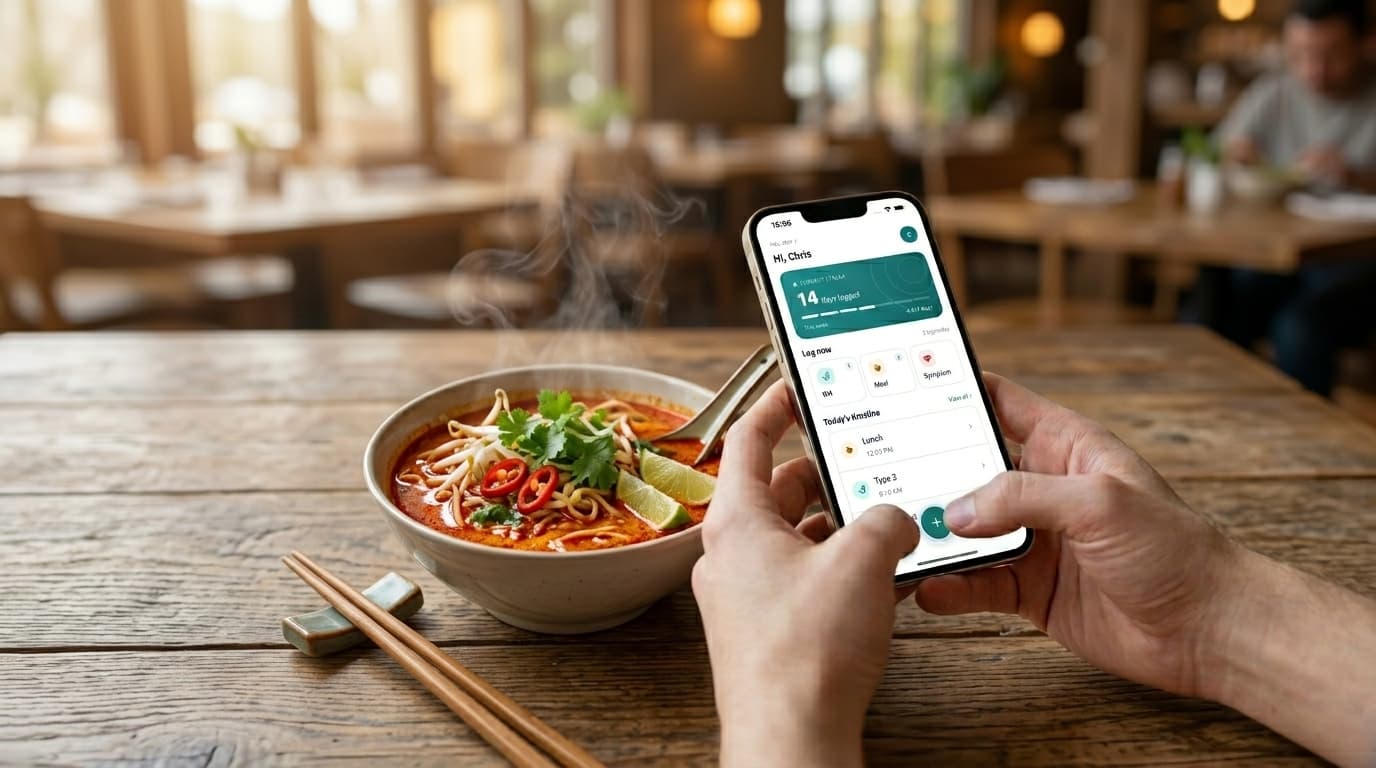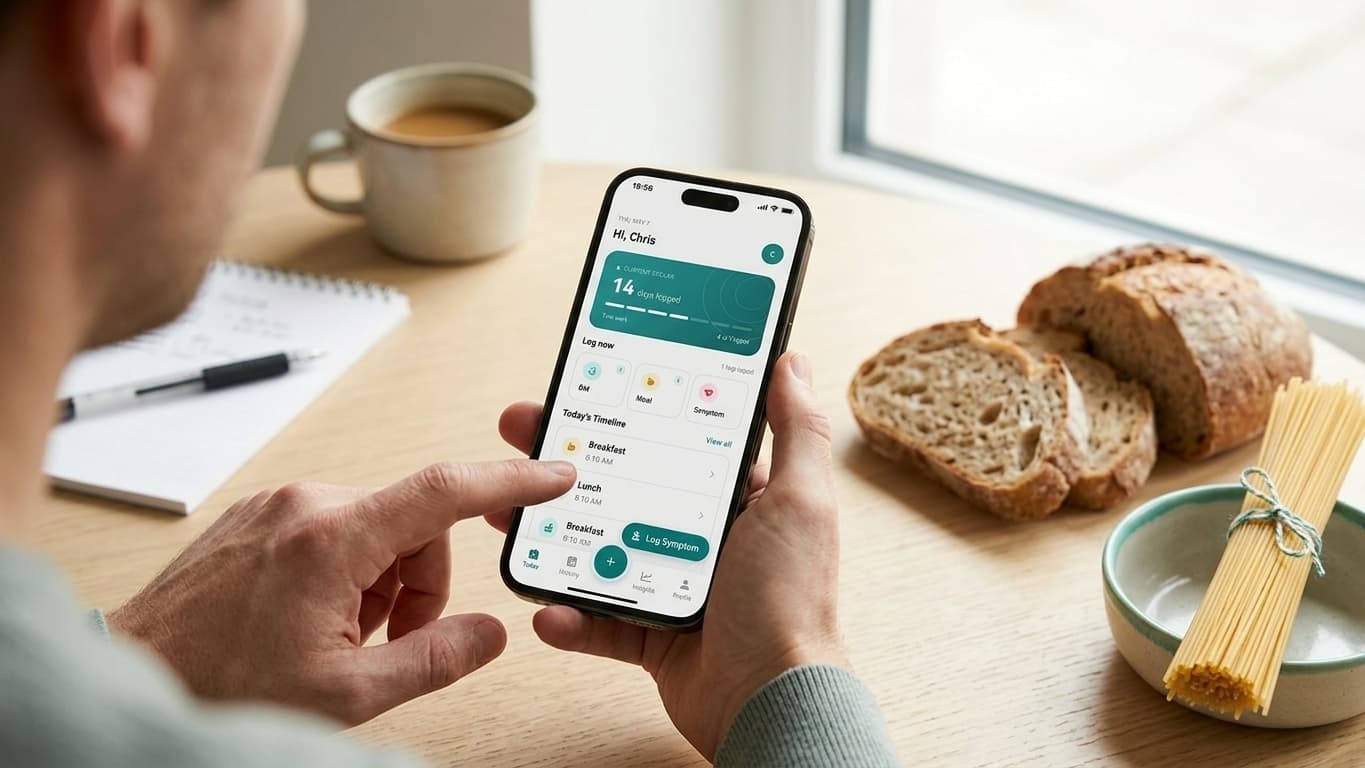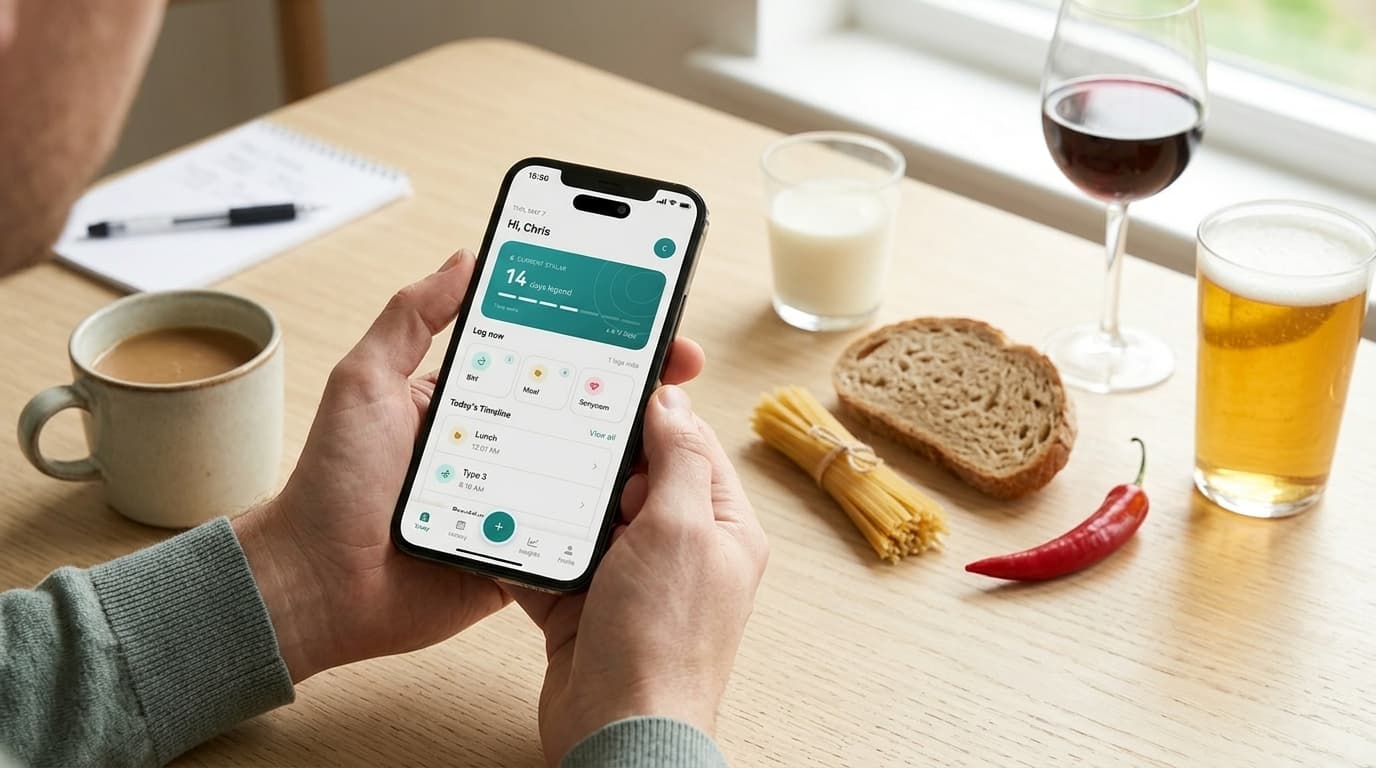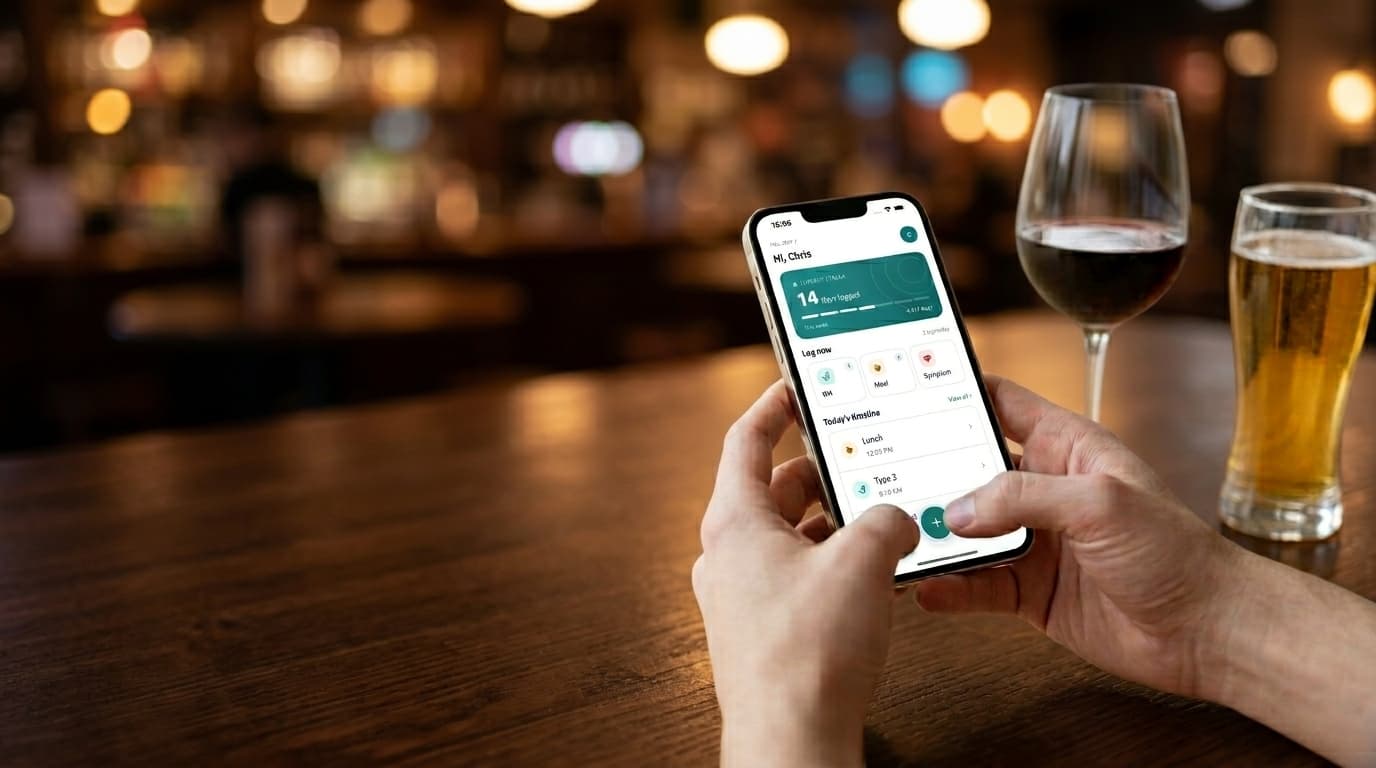
Alcohol can affect IBS through several routes at once: it irritates the gut, can speed up how fast things move, disrupts sleep, and often comes with sugary or high-FODMAP mixers. Whether alcohol is a trigger for you, and which drinks, is individual. The cleanest way to find out is to log it for two weeks and review the pattern.
If a night out reliably means a rough next morning for your gut, you are not imagining it. But alcohol is not one thing. The type of drink, the amount, what it is mixed with, and how it affects your sleep all play a part, which is why a quick test beats a blanket "no drinking" rule.
Key takeaways
- Alcohol can trigger IBS through gut irritation, faster transit, disrupted sleep, and high-FODMAP mixers.
- The drink matters. Beer and cider and sugary cocktails are often harder than a small glass of dry wine or a plain spirit.
- The mixer can be the real trigger, since sodas, juices, and tonic can be high-FODMAP.
- Poor sleep after drinking can amplify symptoms the next day, separate from the alcohol itself.
- A 14-day log of drinks alongside stool type and symptoms is the clearest way to test it.
Why alcohol can trigger IBS symptoms
It irritates the gut and speeds up transit
Alcohol can irritate the lining of the digestive tract and affect how quickly the gut moves. For some people that means looser stools or urgency, especially after larger amounts.
The drink and the FODMAPs in it
Beer, cider, rum, dessert wines, and sugary cocktails tend to be higher in fermentable carbohydrates than dry wine or plain spirits. Carbonation adds bloating. So two drinks with the same alcohol content can affect your gut very differently.
It is often the mixer
A spirit on its own may sit fine while the same spirit with a sugary soda or fruit juice does not. Many mixers are high-FODMAP, so they can trigger symptoms independently of the alcohol.
Poor sleep amplifies everything
Alcohol disrupts sleep quality, and poor sleep is itself linked with worse IBS symptoms. Some of what feels like a gut reaction the next day is the knock-on effect of a bad night.
How to test whether alcohol is your trigger
Guessing rarely works, because IBS symptoms vary day to day and other triggers overlap. A short, structured test is more reliable.
- Log your normal pattern for a few days. Record your drinks (type, amount, and mixers), your stool type on the Bristol scale, urgency, and symptoms like bloating or cramps.
- Change one thing for two weeks. Cut alcohol out, reduce the amount, or switch to a lower-FODMAP option while keeping everything else the same. Changing one variable at a time keeps the result readable.
- Keep logging. Consistency matters more than detail. A quick note each day beats a perfect note once a week.
- Review the two weeks together. Look for whether your stool type and symptoms actually shifted, not just one good or bad day.
If symptoms ease when you cut back and return when you drink again, that is a strong signal for you. You may also find a certain drink or amount is fine while another is not.
What to track alongside alcohol
- Stool type (Bristol scale 1 to 7)
- Urgency and abdominal pain
- Bloating, gas, and other symptoms
- The drink type, amount, and any mixers
- Sleep quality that night
- Stress and other foods, which can amplify any trigger
The bottom line
Alcohol is a plausible IBS trigger, but the type, the amount, and the mixer all change the picture, and so does the sleep it costs you. It is also just one of several common IBS trigger foods worth testing one at a time. Rather than swearing off drinking on a hunch, log it for 14 days alongside your stool and symptoms and let your own data show you what, if anything, your gut struggles with.
Medical note
This article is for educational purposes only and does not provide a diagnosis. It does not replace medical care. If symptoms are new, severe, unusual for you, persistent, getting worse, or linked with warning signs such as bleeding, black stools, anemia, or unexplained weight loss, seek medical advice. If you are concerned about your drinking, speak with a healthcare professional.
Editorial note
This article was written for educational purposes and references general guidance from NIDDK, NHS, Monash University, and the American College of Gastroenterology.
FAQ
Does alcohol make IBS worse?▼
It can. Alcohol irritates the gut lining, can speed up transit, and disrupts sleep, all of which can amplify IBS symptoms. The effect depends on the type of drink, the amount, and the person, which is why tracking helps.
Which alcohol is best for IBS?▼
There is no universally safe drink, but lower-sugar, lower-FODMAP options like dry wine, plain spirits, or gin with a low-FODMAP mixer tend to be gentler than beer, cider, rum, or sugary cocktails. Testing your own response is the only way to be sure.
Why does beer upset my stomach but wine does not?▼
Beer contains fermentable carbohydrates and is often higher-FODMAP than dry wine, and the carbonation can add bloating. Many people with IBS find beer and cider harder than a small glass of dry wine, but it is individual.
Is it the alcohol or the mixer?▼
Often the mixer. Sugary sodas, fruit juices, and tonic can be high-FODMAP and trigger symptoms on their own. Logging the full drink, including what it is mixed with, helps separate the alcohol from the extras.
How long should I test cutting out alcohol?▼
Around 14 days. Cut down or stop for two weeks while keeping everything else the same, keep logging stool and symptoms, then review whether your pattern actually shifted before deciding.